Tattoo Healing Hrocess
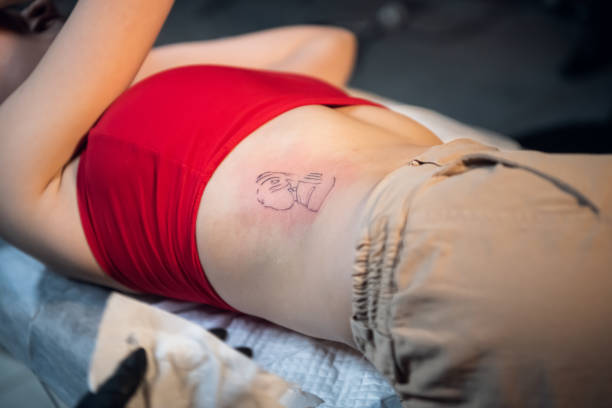
There are three stages to healing. Although this process may vary for each person, it usually takes between 1 and 2 weeks to heal. This outline can differ depending on the artist’s tattooing style and size.
Let’s start by saying that bandaging is a vital part of taking proper care of your new piece.
Your tattoo will be freshly covered when you leave the shop. Your tattoo will be covered with bandaging to absorb any excess ink or fluids that might leak. You will be instructed to remove the covering within a few hours or a week. This depends on what type of wrap was used and the instructions given by the artist. You will be instructed to remove the bandage within a few hours. However, Saniderm should be left on for at least 24 hours, depending on your artist’s instructions. This bandage eliminates several stages of the healing process. It can be removed easily after a washing session and applied aftercare to a new tat. This covers your skin to prevent bacteria from entering your skin. It also protects your tattoo from being rubbed onto your clothing and irritated. You can use this bandaging to cover your tattoo from being rubbed onto your skin.
The artist will tell you how long to keep the dressing on. You will only need to keep the dressing on for as long as your artist recommends.
Stage 1: Redness, Oozing, Soreness.
It may feel slightly red, swollen and sore the first few days following your tattoo session. This is normal as your tattoo should be treated like an open wound. As your tattoo heals, you will notice a gradual improvement in redness, swelling, and oozing. The next stage is when scabbing forms over the area.
Your tattoo will heal faster if you follow your aftercare instructions. A properly cared-for tattoo will give you a better result in terms of vibrancy, quality, and longevity.
Stage 2 – Itching, Scabbing and Flaking.
This stage will see the first signs of itching, scabbing, and flaking. You will continue this process until all layers of dead skin have been removed. It would be best if you kept your tattoo clean, use fragrance-free soap to wash it, and then moisturize it using either tattoo aftercare cream, coconut oil, or fragrance-free moisturizers. This will keep your tattoo hydrated, and reduce itching and flaking that can sometimes make it uncomfortable.
These are signs that your tattoo has reached the final stage of its healing process.
Stage 3 – Drying out, Dulling, and Cloudiness.
Your tattoo will appear slightly duller once the flaking and scabbing stops. Your tattoo may feel like it has completely healed. Your tattoo may still look slightly shiny. This is because the process of healing still needs to be completed. This is when a new layer of skin begins to form and settles. Your piece will gradually start to look like the rest of the skin by the end of this phase, and you will be ready for the final stage of healing.
You will need to maintain your tattoos clean, moisturised (if necessary), dried and treated with care.
Remember to follow the aftercare instructions of your artist. This will ensure that the healing process is as smooth as possible.
These symptoms could indicate a possible infection and may need to be checked by a doctor.
Rashes like bumps around the tattoo area.
Swelling that doesn’t subside after your tattoo session.
Tattoos that have been inflamed or warm to the touch
Visible pus can be seen coming from the tattoo.
Possible allergic reactions
Fever, chills and nausea
It may seem like a little is happening with tattoo aftercare. This will only last for a few weeks, and the client is given these instructions to ensure the best outcome.
It would be best if you took care of your tattoo as best as you can. Follow the aftercare instructions of your artist as closely as possible. You will have a vibrant piece of art you can be proud of for the rest your life.


Post Comment